CAN AI SHARPEN AIRCRAFT MAINTENANCE WITHOUT REPLACING HUMAN EXPERTISE?
Published Wednesday, 26th August 2026Alan Steer, Base Maintenance Manager
As aircraft become more digital and data-led, MRO providers must combine smarter technology with practical training, disciplined teams and sound engineering judgement.
Aircraft maintenance has always been built on accountability. For a Base Maintenance Manager, that means ensuring the organisation has the facilities, people, skills, tools, equipment, materials and data needed to deliver this work safely, while meeting all contractual obligations.
That accountability is becoming more complex as aircraft evolve. Though the principles of base maintenance remain familiar – inspect, repair, check, certify and return to service safely – what has changed are the aircraft themselves. Once an analogue challenge, they have become increasingly digital, software-reliant and data-led, changing how maintenance is planned, delivered and recorded.
Can AI optimise base maintenance?
As with many industries, the next major step change we’ll see in this sector will be driven by artificial intelligence and connected digital systems. Airlines and MROs operate in complex environments where aircraft availability, parts delays, labour constraints, turnaround expectations and unscheduled defects all affect performance.
AI-driven tools have the potential to continuously optimise maintenance slot allocation, workforce deployment, aircraft routing against maintenance needs, recovery from AOG events and the coordination of tasks with parts availability. In practical terms, that could mean fewer unnecessary removals, better sequencing of job cards, improved control of man hours and stronger visibility of materials.
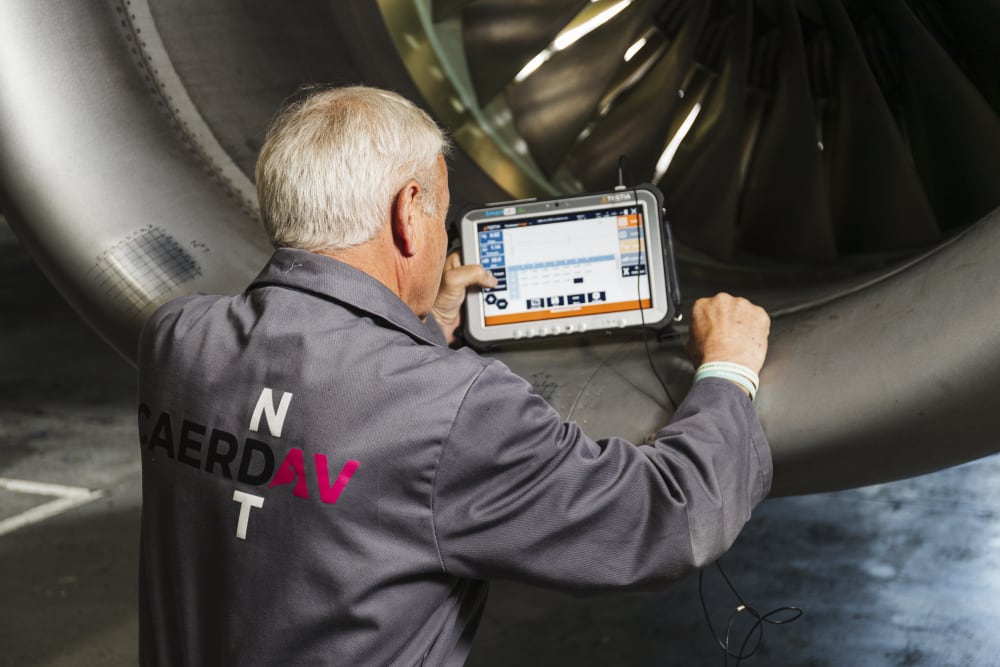
The technology is already moving into AI-assisted troubleshooting, drone-based fuselage inspection, engine borescope analysis and surface damage detection. At Caerdav, we are utilising AI computing power to troubleshoot defects on large aircraft, while development work is exploring manpower mapping, task allocation, timekeeping, job card creation, recording, man-hour control and material control.
A truly connected view
One of the clearest opportunities is integration. MROs often rely on multiple software platforms that each do different things. The ideal future would be a single digital system connecting planning, manpower, tooling, materials, job cards, compliance and customer requirements into one operational view.
That kind of platform would not remove the need for experienced people, but it would help them make faster, better decisions. New technology should still be judged carefully against cost, necessity and reward. That reward is not always purely financial. A tool is worth considering if it supports safety, efficiency, quality or customer satisfaction.
Could AI add genuine value?
AI is likely to add real value in scheduled and non-scheduled maintenance. Over time, aircraft manufacturers and operators will build more intelligence into aircraft systems, using onboard data to identify defects, support rectification and shape maintenance programmes. AI may help decide whether maintenance should be advanced, deferred or re-sequenced.
However, the idea that AI will diagnose and fix aircraft with minimal human oversight is unrealistic in the near term. Real maintenance is dirty, complicated and physically demanding. It requires dexterity, judgement, experience and an understanding of how work is carried out on the aircraft. There will remain strong demand for human intervention for some time yet.
There are also areas ready for a digital overhaul. Navigation data, for example, is often loaded monthly from devices, servers or standalone sources. In future, aircraft may update navigation databases in real time while in operation, although cyber security, data integrity and protection against corruption will be critical.
Why traditional training still matters
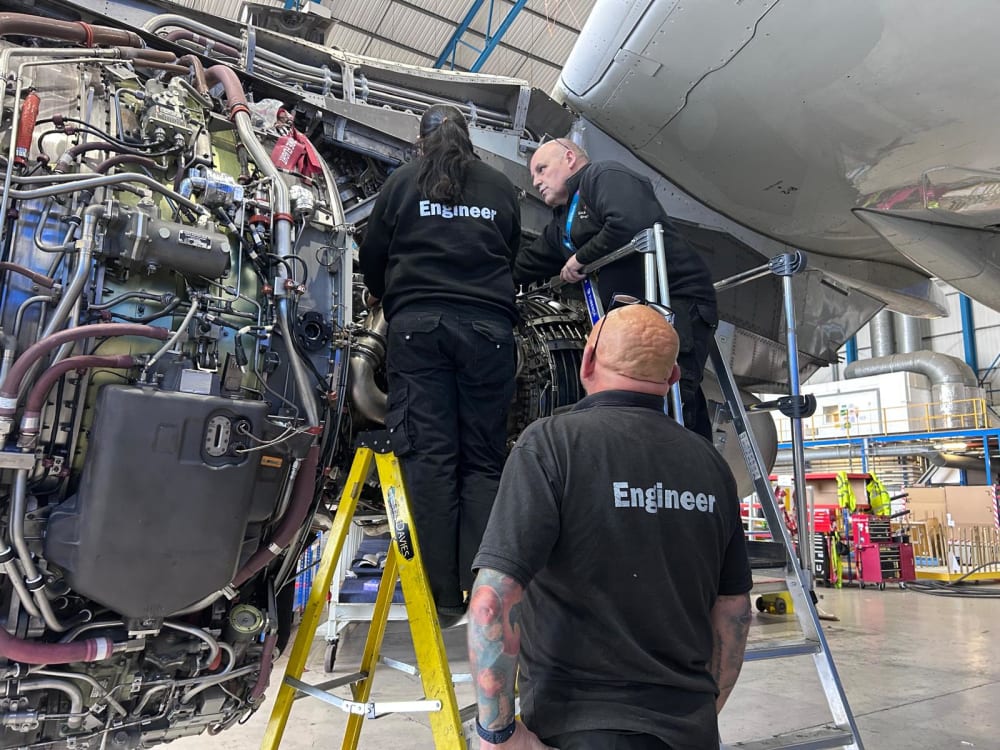
For all the excitement around AI, the industry’s most underestimated challenge may still be people. Aviation has been affected by a shortage of human resource and a reduction in skill sets in key areas. A decline in practical knowledge and hands-on capability is already affecting MRO businesses.
McKinsey has suggested the aviation maintenance technician shortfall could reach around 60,000 by 2029.
The answer is not to reject technology. It is to combine it with stronger foundations, a return to grass-roots training, and training that adapts to changing aircraft. Younger teams need to understand systems and software, but also be given insight into the right attitude, discipline and accountability for the commercial realities of MRO work.
Caerdav’s focus is on maintaining that balance. The business has built its reputation on safe, compliant work delivered to high standards, supported by strong customer relationships and an efficient team. It is also bringing new talent through trainee programmes and apprenticeships, including 45 apprentices currently in the building and a further 20 being supported through a local college.
The future of MRO will be shaped by AI, digital systems and smarter resource planning. But it will still depend on competent people who understand the aircraft, the customer, commercial pressures and the safety consequences of every decision. The organisations that succeed will use technology to sharpen human capability, not replace it.