AGEING AIRCRAFT: MROs NEED TO ADAPT TO CHANGING FLEET DYNAMICS
Published Thursday, 19th February 2026Supply chain disruptions, labour shortages, growing tariffs and geopolitical factors have all played a part in delaying deliveries of new generation commercial aircraft, meaning earlier models are flying for longer - our Director - Commercial & Business Development, Philip Swanson explores the impact...
The global aircraft MRO market is forecast to reach $156 billion by 2035, driven by the ageing of in-service fleets and subsequent deferred retirements, caused in no small part by delivery delays from the major OEMs. Airlines worldwide are extending leases and keeping older aircraft in service longer, as shortages of new-generation models, engines and other components persist.
Currently, there are around 11,500 earlier model Airbus A320s and Boeing 737s in active service. Despite not being as efficient, particularly in relation to higher fuel burn, their lower lease rates and well-understood operating costs still make them economically attractive compared to their higher priced but more efficient new generation cousins. Put simply, until manufacturers like Airbus and Boeing clear the backlog, demand for these earlier models will continue to increase.
For an independent MRO like Caerdav – which specialises in the maintenance of earlier model Boeing 737s and Airbus 320s – which works with airlines that continue to demand minimal maintenance turnaround times, the knock-on effect has been to ramp up continuous improvement processes in the hangar for better efficiency of aircraft maintenance.
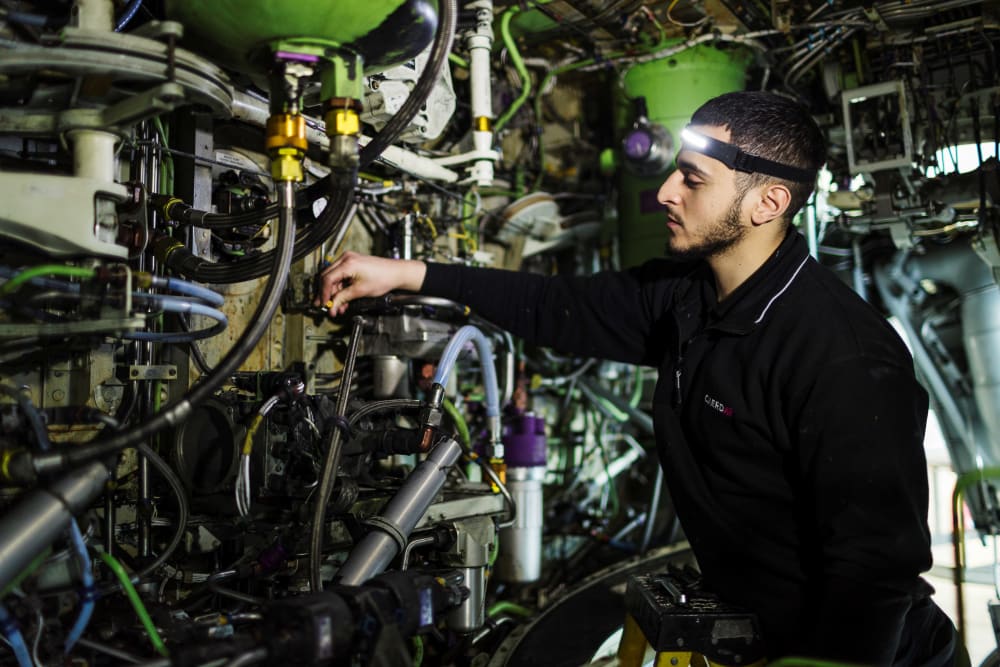
Complex and costly maintenance
Keeping older aircraft airworthy requires more frequent and more comprehensive base maintenance checks, including heavy structural inspections and corrosion control. These tasks are inherently more time-consuming and costly than line maintenance. For MROs, more intensive maintenance extends aircraft turnaround times, increases labour demand and puts significant pressure on existing hangar capacity.
Of course, earlier model aircraft also require older generation components, with parts shortages and potential obsolescence compounding the challenge of replacing them. Older technology can be harder to source, while compliance issues can arise when those materials no longer meet today’s more stringent standards. In some cases, MROs and airlines have to rely on Used Serviceable Materials (USM) to bridge the gap, a practice that has grown significantly as supply chains remain constrained.
Another key factor to consider relates to the heightened scrutiny earlier models receive from the aviation authorities – for example, regulations such as FAA Part 43 mandate additional inspections and documentation during heavy maintenance and modifications. These increased compliance requirements add costs and time to the maintenance process in the hangar, in turn placing further strain on MRO resources.
Finding the skills
It is no secret that the industry is facing a shortage of well trained and experienced aircraft technicians and licenced engineers. Retirements outpace current recruitment, and the younger engineers that are entering the sector often lack familiarity with older technologies, creating a skills gap that can slow maintenance turnaround times.
To counter this, MROs are responding with workforce development initiatives, including upskilling programmes, improved retention strategies, and expanded apprenticeship schemes. For example, Caerdav’s award winning Aerospace Apprenticeship Programme illustrates the benefits of training the next generation so that they are able to work on both old and new aircraft alike.
The MRO response
Aside from training and upskilling the workforce, MROs like Caerdav are employing a range of strategies to meet the challenges surrounding an ageing global fleet.
For example, the use of USM helps to manage component shortages and control costs, potentially offering savings of between 30 and 60% compared to new OEM parts. While introducing advanced diagnostic tools and predictive maintenance analytic platforms can also help to accelerate complex repairs and reduce downtime.
Another major impact longer maintenance intervals can have is the monopoly on available hangar capacity, which has led to many MROs looking to expand – including Caerdav, which has doubled its number of heavy maintenance lines to four over the past two years. This expansion has come either through investments in new facilities or by finding ways to maximise operational space at an existing site.
With the demand for MRO far outstripping available supply thanks to the ageing fleet, investment in hangar capacity has become a necessity, but one that should allow MROs to reap rewards in the longer term.
The power of independence
Independent MROs, such as Caerdav, are particularly well-positioned to capitalise on their increased capacity and improved facilities with quick decision making, avoiding the complexities of being owned or operated by an airline. However, the trend towards extended aircraft life is a double-edged sword. On one hand, older aircraft generate higher maintenance volumes, which drive revenue growth. While on the other, the complexity and cost of these events can squeeze margins and require significant investment in infrastructure, tooling, and talent.
The ageing fleet phenomenon is not a short-term anomaly and will persist until OEM production stabilises and supply chain constraints ease, some in the industry see this situation stretching into the next decade or beyond. However, the adaptability and shorter decision making processes of independent MROs underscores their importance in the modern MRO ecosystem. While global players focus on scale, companies like Caerdav thrive by offering agility, personalised service, and deep expertise in legacy aircraft platforms – qualities that are increasingly valuable as the industry navigates the ageing fleet challenge.